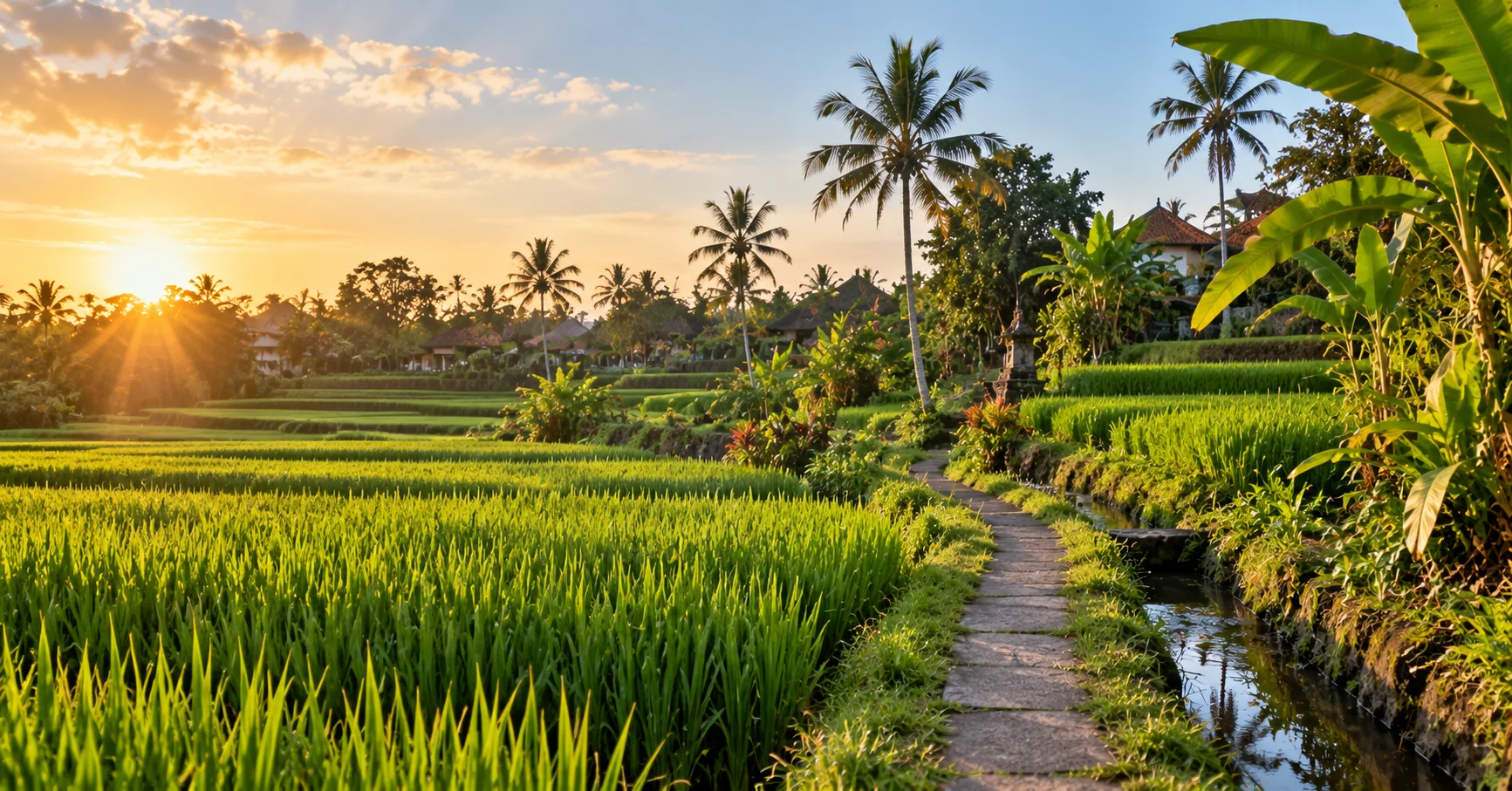
Canggu rice fields offer a quieter way to experience Bali beyond the beaches, cafés, and busy coastal streets. Around Canggu, pockets of agricultural landscape still provide views of rice paddies, local farming activity, tropical vegetation, and village surroundings.
For travellers who want a slower experience, exploring these landscapes can be a simple addition to a Canggu itinerary. You do not need to turn it into a full-day excursion. A carefully planned walk through an appropriate accessible area can give you a different perspective on Canggu while keeping the experience respectful of local communities and working farmland.
If you are planning a wider list of activities, start with this guide to things to do in Canggu and use the rice fields as a quieter nature-focused experience within your trip.
Why Explore Canggu Rice Fields?
A Different Side of Canggu
Canggu is often associated with beaches, surfing, cafés, restaurants, and a lively lifestyle scene. Yet the landscape around the destination is not entirely urban or coastal.
Indonesia Travel describes Canggu as a destination where the coastal environment is accompanied by green rice paddies and a remaining rural character. Indonesia Travel – Canggu Beach
That contrast is one of the reasons a rice-field walk can be worthwhile. Instead of moving from one commercial destination to another, you can slow down and observe a more agricultural side of the area.
Why Rice Fields Matter to Bali’s Landscape
Rice cultivation is closely connected with the traditional Subak irrigation system in Bali.
The Bali Provincial Agriculture and Food Crops Authority describes Subak as an irrigation system and farmer-based organization connected with the management of water for rice cultivation and other agricultural activities. Bali Provincial Agriculture Authority – The Origin of the Balinese Subak System
This makes a visit to a rice-field landscape more meaningful than simply looking for a scenic photo. The landscape reflects an agricultural system that has played an important role in Bali’s rural environment.
Where to Experience Rice Fields in Canggu
Subak Uma Desa and the Canggu Rice-Field Landscape
One of the local agricultural areas associated with Canggu is Subak Uma Desa.
The official Desa Canggu website identifies Subak Uma Desa as a Subak area in Canggu with agricultural land and rice-farming activity. Desa Canggu – Subak Uma Desa Canggu
Local government information also documents the area as a landscape where people have walked or jogged while observing the surrounding agricultural environment. Desa Canggu – Subak Uma Desa as a Tourism Area
However, it is important to distinguish between documented walking activity in an area and the assumption that every agricultural path is a public tourist trail. Rice fields remain working agricultural land, so access can vary depending on the specific path, local conditions, farming activity, and community use.
For that reason, treat the area as a local landscape to experience respectfully rather than as a conventional attraction with guaranteed public access to every path.
Rice-Field Areas Beyond the Main Coastal Strip
As you move away from Canggu’s busiest coastal areas, the landscape can become more rural and agricultural.
Rather than searching for a single official “Canggu rice field trail,” it is better to think in terms of rice-field landscapes and appropriate walking areas around the wider Canggu countryside.
This approach is more practical because agricultural paths can change according to farming activity and local use.
If you are unfamiliar with the area, a local recommendation or appropriate route from your accommodation can help you avoid walking through private farmland or restricted areas.
What Can You Do Around Canggu Rice Fields?
Take a Scenic Walk
A rice-field walk is primarily about slowing down.
You can use the experience as a short morning walk, a quiet break from the beach, or part of a broader day exploring Canggu.
The goal is not necessarily to cover a specific number of kilometres. Instead, look for an appropriate route where you can walk without interfering with farmers, crops, irrigation channels, or local activities.
Wear comfortable footwear and expect some paths to be uneven, narrow, or less developed than roads in the main tourist areas.
Enjoy Rice-Field Photography
The agricultural landscape also works well for casual photography.
Look for:
- rice paddies and changing shades of green;
- irrigation channels;
- tropical vegetation;
- village surroundings;
- traditional agricultural activity;
- open views away from the busiest streets.
Photography should remain unobtrusive. Avoid entering planted areas simply to get a closer photograph, and always respect people working in the fields.
Combine Nature With Local Culture
The rice fields can also provide context for understanding how Bali’s agricultural landscape functions.
Official Desa Canggu information documents agricultural activity in the Subak Uma Desa area, including farmers working in the fields. Desa Canggu – Agriculture and Subak Uma Desa
This is an important distinction: the rice fields are not simply scenery created for visitors. They are part of a living agricultural landscape.
Best Time for a Canggu Rice Field Walk
For a comfortable walking experience, morning or later afternoon can be practical choices, particularly if you want softer natural light for photography.
Morning can work well if you prefer a quieter start to the day. Later afternoon can provide different light and a more relaxed atmosphere before you continue to another Canggu activity.
However, conditions can vary. Weather, rain, farming activity, and the condition of individual paths should influence your decision on the day.
If a path looks muddy, flooded, restricted, or unsuitable for visitors, choose another route rather than attempting to continue.
How to Explore Canggu Rice Fields Responsibly
Stay on Appropriate Paths
Do not assume that every narrow path through a rice field is intended for visitors.
Stay on paths where walking is clearly appropriate and avoid entering areas that appear private, restricted, or actively used for farming.
Respect Farmers and Local Communities
Farmers may be working around irrigation channels, crops, and agricultural equipment.
Give people space and avoid blocking paths or approaching workers simply for photographs.
If you are unsure whether a particular route is appropriate, ask locally before continuing.
Avoid Damaging Crops
Never walk directly across planted rice fields to shorten a route or find a better photo angle.
Even a small shortcut can damage crops or interfere with agricultural work.
Leave No Waste
Take everything you bring with you back out.
Avoid leaving plastic bottles, food packaging, tissues, or other waste in agricultural areas.
Responsible behaviour is particularly important when visiting landscapes that are primarily used by local communities rather than designed as conventional tourist attractions.
Canggu Rice Fields vs Beach Activities
Both experiences offer a different side of the destination.
| Rice Field Experience | Beach Experience |
|---|---|
| Slower and quieter | More active and social |
| Agricultural landscape | Coastal landscape |
| Walking and photography | Swimming, surfing and beach activities |
| Focus on scenery and local environment | Focus on ocean and leisure |
| Best suited to slow travel | Better suited to classic Canggu beach experiences |
You do not have to choose one over the other.
A rice-field walk can complement a beach-focused itinerary, especially if you want to experience more than Canggu’s coastal side.
For a broader beach overview, see the Best Beaches in Canggu guide.
How to Add a Rice Field Walk to a Canggu Itinerary
Morning: Start With a Nature Walk
Begin your day with a short rice-field walk while the environment is relatively quiet.
Keep the route flexible rather than trying to force a specific distance or trail.
Late Morning: Continue With Breakfast or a Café
After walking, continue toward a suitable breakfast or café stop.
This allows the rice-field experience to remain one part of the day instead of turning it into an overly structured excursion.
Afternoon: Explore Other Canggu Activities
You can then continue with beaches, cafés, shopping, surfing, or other activities depending on your interests.
For a complete day-by-day structure, use the Canggu Itinerary 3 Days guide.
Evening: Slow Down
After a full day, return to your accommodation and keep the evening flexible.
If you want a broader overview covering transport, areas, beaches, food, accommodation, and planning, see the Canggu Travel Guide.
Where to Stay for Exploring Canggu’s Nature
Choosing accommodation in a convenient part of Canggu can make it easier to combine nature experiences with beaches, cafés, and other activities.
Casa Amarta Canggu is a boutique loft near Berawa Beach, positioned as an accommodation option for travellers who want convenient access to Canggu’s wider lifestyle and destination experiences. Casa Amarta Canggu Boutique Loft
For travellers planning a Canggu stay, you can explore Casa Amarta Canggu and consider how a nature-focused activity can fit alongside the rest of your itinerary.
FAQ
Are there rice fields in Canggu?
Yes. Rice paddies and agricultural landscapes remain part of the wider Canggu environment, even as the destination has developed into a major tourism area. Indonesia Travel also notes the presence of green rice paddies around Canggu’s coastal environment. Indonesia Travel – Canggu Beach
Where can I see rice fields in Canggu?
Subak Uma Desa is one documented agricultural area in Canggu. However, the exact accessibility of individual paths can vary, so visitors should use appropriate routes and respect agricultural land.
Can you walk around Canggu rice fields?
Walking is possible in some appropriate areas, and official Desa Canggu information documents walking and jogging activity around Subak Uma Desa. Desa Canggu – Subak Uma Desa as a Tourism Area
This does not mean every rice-field path is publicly accessible. Always stay on suitable paths and avoid private or restricted agricultural areas.
Is Subak Uma Desa open to visitors?
The area has been documented by Desa Canggu as a local agricultural landscape visited by people for activities such as walking and jogging. However, visitors should not interpret this as unrestricted access to all agricultural land. Local conditions and community use should always be respected.
What can you do around Canggu rice fields?
The main activities are scenic walking, photography, observing the agricultural landscape, and experiencing a quieter side of Canggu.
What is the best time for a rice-field walk?
Morning or later afternoon can be practical choices for walking and photography. Always consider the weather and current condition of the route rather than relying on a fixed schedule.
What should I bring?
Comfortable footwear, drinking water, sun protection, and a phone or camera are generally useful. If rain is possible, bring suitable protection and avoid paths that become unsafe or excessively muddy.
Can I take photographs?
Yes, photography can be part of the experience. However, avoid entering planted areas or photographing people closely without permission.
Do I need a guide?
Not necessarily for every short walk, but a local recommendation can be useful if you are unfamiliar with the area or unsure whether a particular path is appropriate for visitors.
Can a rice-field walk fit into a Canggu itinerary?
Absolutely. It works particularly well as a short morning or late-afternoon nature experience alongside beaches, cafés, surfing, and other Canggu activities.
Final Thoughts
Canggu rice fields provide an opportunity to see a quieter and more agricultural side of the destination.
The most rewarding approach is not to treat the rice fields as another tourist attraction to rush through. Instead, take a slower walk where access is appropriate, observe the landscape, respect farmers and local communities, and leave the area as you found it.
For travellers building a balanced Canggu itinerary, a rice-field experience can complement the destination’s better-known beaches and lifestyle attractions while adding a more peaceful connection with Bali’s agricultural landscape.
If you are planning your stay, explore Casa Amarta Canggu and build your itinerary around a combination of nature, beaches, local experiences, and time to slow down.